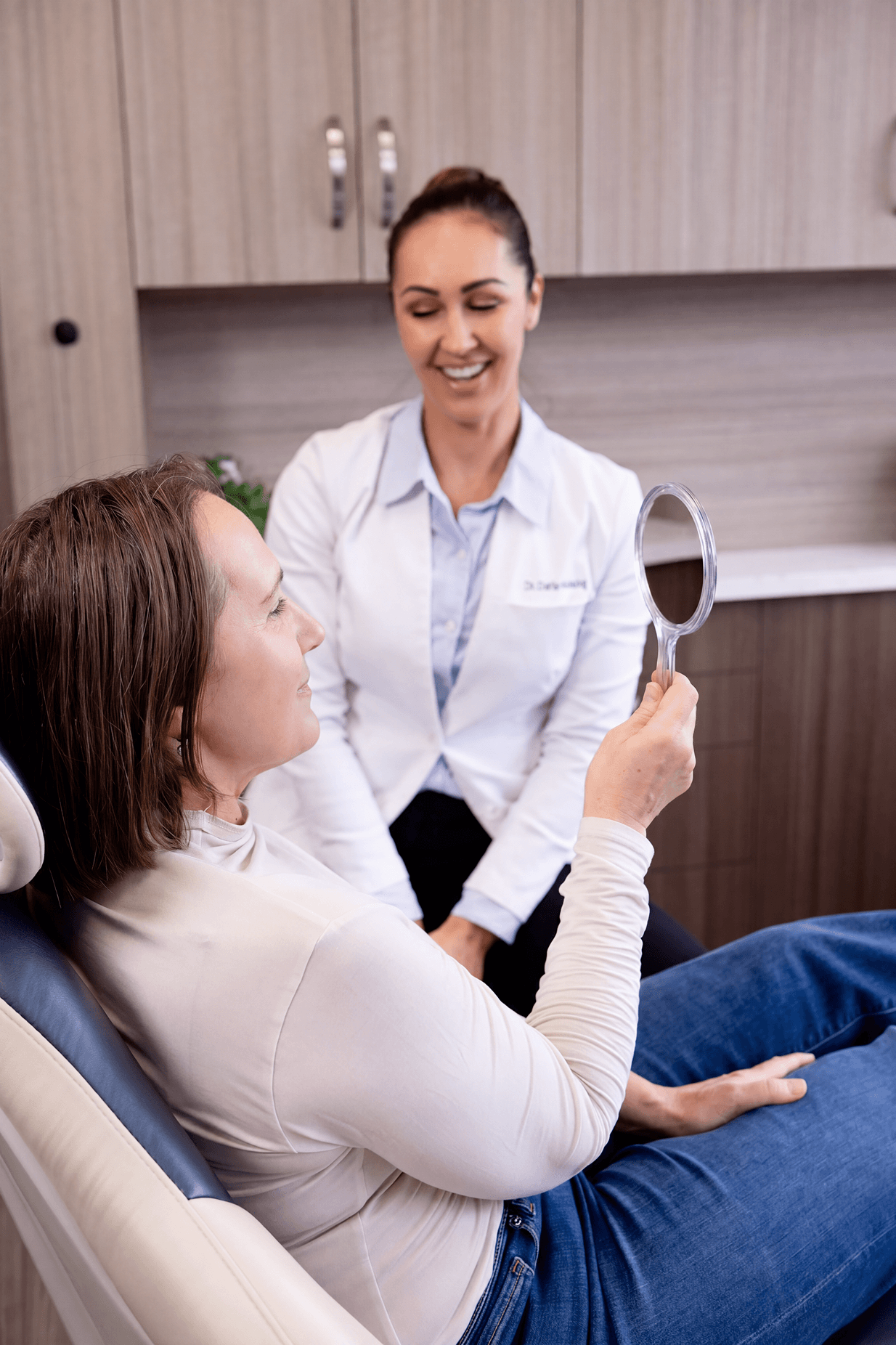
High-quality veneers designed to look and feel natural
Custom-made and designed to last
How do veneers work?

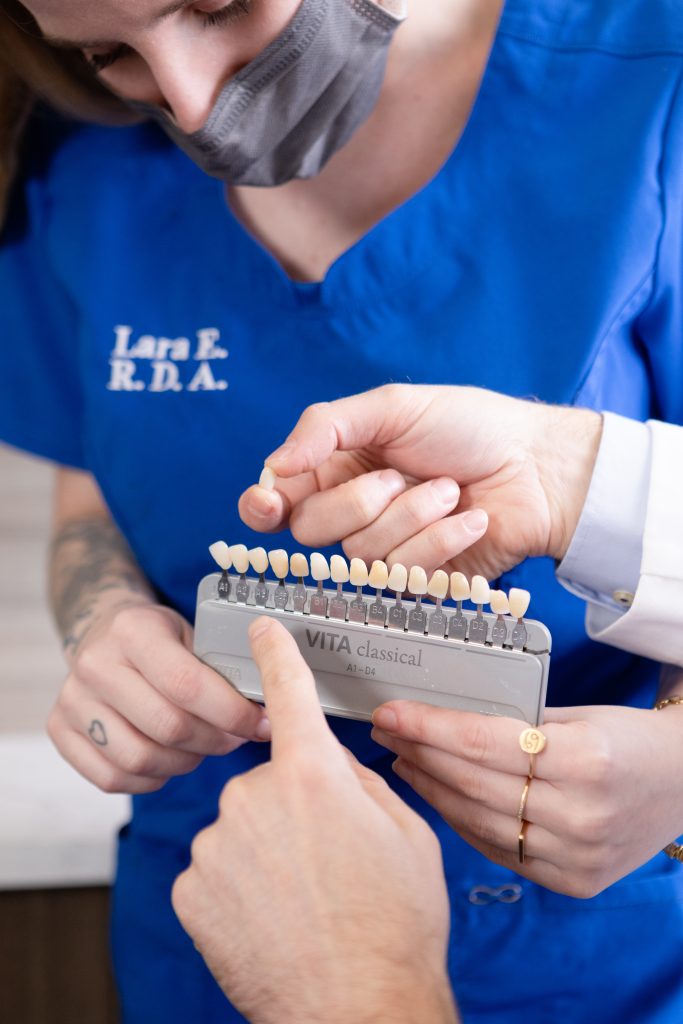
Materials

Methods

Maintenance
Why Patients Choose Veneers

Natural-looking smile
Long-lasting
Can improve alignment appearance without orthodontics
Durable

Why D2 Dental
Advanced Precision Scanning
Specialized Expertise
High-Quality Materials
What to expect
We’ll walk you through your options and help you choose the right approach for your goals, your timeline, and your smile. We’ll explain each step of the process before we begin and take the time to answer your questions. At D2 Dental, our whole team takes care to help everyone feel informed, supported, and at ease.


FAQs
What is the difference between porcelain and composite veneers?
Porcelain veneers are thin, custom-made shells bonded to the front of your teeth, designed to closely match the look and texture of natural enamel. Composite veneers are sculpted directly onto your teeth in a single visit using a tooth-colored resin material.
Do veneers affect your natural teeth?
For porcelain veneers, a small amount of enamel is gently prepared to help the veneer sit flush. The amount removed is minimal and carefully controlled, and we will walk you through exactly what to expect before we begin. Composite veneers typically require little to no preparation.
How long do veneers last?
Porcelain veneers can typically last 10 to 15 years and composite veneers can average 5 to 7 years with proper care.
Are snap on veneers or removable veneers a good option?
Snap-on veneers are a cosmetic-only product that sits over your natural teeth like a thin mouthguard. They can provide a temporary confidence boost for a special event, but they are not suitable as a long-term solution. In fact, they can look unnatural, trap bacteria against your teeth, and don’t address the underlying concern. We value high quality dentistry and natural-looking smiles, and thus we would not recommend snap-on or removable veneers. If you’re considering veneers, we recommend scheduling a consultation so we can discuss options that are custom-fitted, professionally placed, and built to last.
Which conditions can veneers help treat?
We will help evaluate if veneers is the right fit for you. Below are examples of conditions that can be treated with veneers:
Simple Examples:
- Tooth discoloration or staining that whitening can’t resolve
- Minor chips or worn edges
- Small gaps between teeth
Moderate Examples:
- Uneven or misshapen teeth
- Slightly crooked teeth
- Teeth that appear too short or too small
- Multiple teeth with surface-level imperfections
Complex Examples:
- Combination of discoloration, chips, and uneven spacing across several teeth
- Teeth with structural wear from grinding
- Full smile makeovers involving multiple veneers across the front teeth
- Teeth with old bonding or restorations that no longer match
Limitations (may need a different treatment):
- Severe decay or weakened tooth structure (may need a crown instead)
- Significant misalignment or bite issues (orthodontics may be needed first)
- Active gum disease (needs to be treated before cosmetic work)
- Heavy teeth grinding without a night guard plan (can shorten veneer lifespan)
- Teeth with insufficient enamel for bonding
- Large gaps or missing teeth (may require implants or bridges)
This is not a comprehensive list; we invite you to join us for a consultation to discuss your needs to learn if veneers are right for you.
Still have questions?
Speak with our team
ready to book?